
Now, tell the truth, which line do you think is longer? You would be tempted to say the upper one but in reality they are equal in length.
Additionally, which circle is the larger? You have likely guessed by by now that they are the same but one of them looks a lot bigger.
These well known optical illusions demonstrate how so easily our brains can be misled by appearances. Moreover, the same rule can be applied to our experience of space at home.
Then why not go ahead and that purposefully use those tricks to make your house appear bigger? This is exactly what this blog is all about.
The Vertical Horizontal Illusion
The vertical line will always seem longer though they are in actuality the same length. Why am I telling you this?
Consequently, we can take advantage of this bias in the way we perceive things in our lives. Therefore, we can incorporate vertical lines in our houses to make the space look taller than what it is.
Practical Applications
- Use a wallpaper that uses vertical lines
- Paint straight lines at a place where you would want to emphasize on ceiling height
- Use hanging curtain that has vertical stripes to lengthen the walls
- Interfere with the bookshelves up to the ceiling to attract the eyes upwards
- To create a vertical line, hang pictures either vertically or horizontally to build on those that are smaller
Whatever is vertically oriented will cause our eyes to move upwards and make the space appear taller.
Furniture and Visual Weight
The choice of furniture that is floating near the floor alters the weight of the room. Furthermore, it also increases the space which you observe between the ceiling and the ground.
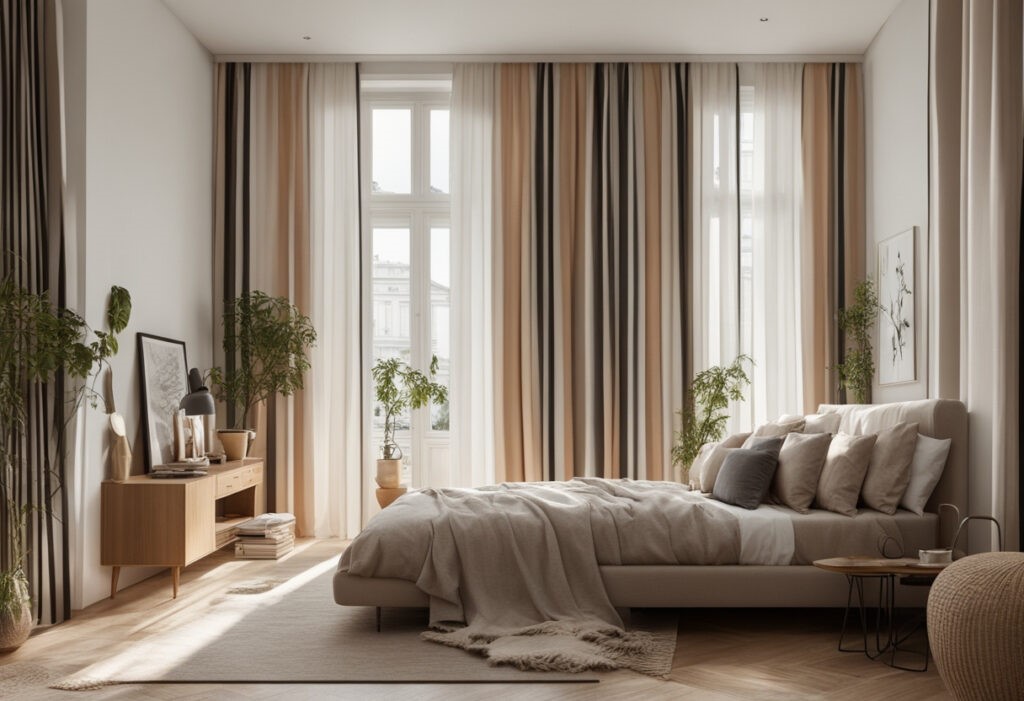
This gives you the impression that you have elevated ceilings and the room has an open, airy feel.
Natural Inspiration
It can be likened to the effect of open spaces such as deserts and expansive plains. Subsequently, this can make the space and sky look extremely large.
Final Tip
In case your room is getting too small and low:
- Use vertical elements on the walls
- Have most of your furniture closer to the floor
Direction, Color, Mirrors: Space Tripping
The Importance of Direction
Very often we do not even consider the way in which we lay our floors, whether it is by wooden planks or tiles. However, this may have a tremendous impact on the perception of your eyes of the space in your room.
Flooring Layout
- The installation of the floor perpendicular to the wall that is longest physically extends the room
- This gives it the effect of being longer than it is
- Direction is important because the lines are naturally followed by the eyes
For more ideas on maximizing space, check out our interior design tips.
The Uses of Color in Perception
The use of color is huge in the way we see space.
Light Colors
Brighter colors, particularly neutral and white colors, relax us. Additionally, the illumination is reflected off the surfaces and it increases the volume of the room that is perceived.
Dark Colors
Black, gray or other dark colors may be oppressive. Moreover, they also absorb light making the space to look smaller.
Ceiling Tricks for Height
It can alter the perception of the height of the room by painting the ceiling to be a lighter shade than the walls. Consequently, eyes tend to be attracted as a result of light moving upwards.
The light gray ceiling increases the perception of height.
Case in point: You can paint your room blue, but can you leave the ceiling white or a light blue shade so as to create a contrast?
The Power of Mirrors
Mirrors are not just to see the reflection of your image. Instead, they are strong pieces to transform your space to a brighter and bigger and more welcoming.
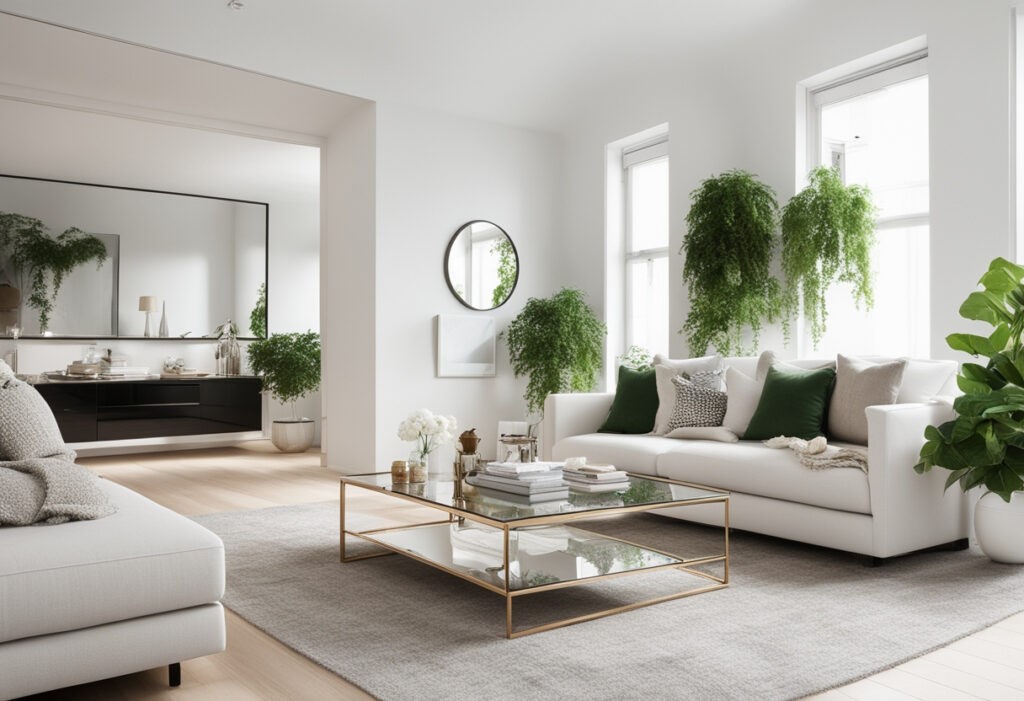
Why Mirrors Work
The reflection is perceived through our brains as more space. Therefore, painting a wall with mirrors will not put more space, but it will be an impression of doubling the size of the room.
Enlarging Space with Reflections and Refrainment Mirrors
Light and Space Hanging Mirrors
When there are spots in your place of residence where space is tight or dark, a mirror can be added. Additionally, mirrors also reflect light and this makes the rooms look larger and brighter.
Put them where the light is required most or where the walls are too thick.
Contemplative Furniture of Proundence
Reflective furniture will take the concept of mirrors a step further. These surfaces reflect and redistribute light. Consequently, they are similar to the numerous little mirrors in the room.
Reflective Pieces Can Be Found in These Examples
- An oily-looking lacquered coffee table
- A reflective side table
These minor additions can make a boring and claustrophobic room look lighter and more open and spacious. If you’re working with limited space, explore our small dining room interior design ideas for practical solutions.
Apply Reflective Surfaces Selectively
Reflective surfaces are effective but they should be used in moderation. However, a lot of reflective works make the room artificial.
Therefore, always be choosy and pick out only important things to emphasis.
The Ebbinghaus Delusion in Design
Furniture in a room can be deceptive just as the Ebbinghaus illusion tricks our eyes to perceive the circles as having different sizes. Similarly, the size and position of furniture in a small room is able to broaden or narrow the perceived size of the room.
Space Perception and Oversized Furniture
The Strategic Use of Large Furniture
Small rooms may seem to be small furniture. However, in fact, a single or two large items can transform the room into a grandeur.
Big pieces create an impression that the space is large enough to work with them. It is all a matter of not crowding it.
The elements in the room are oversized which provides a focus and openness.
The Intelligent Expansive Storage
Built-In Storage Solutions
Storage design makes the room either feel crowded or relaxed. Furthermore, the inbuilt storage is smooth, well-organized, and tidy.
Keep objects out of sight behind cabinet doors which are flushed. Consequently, the less the eyes are swinging about, the more comfortable and roomy is the room.
Mess: The Invader of Small Space
Little rooms are cluttered and therefore suffocating. Additionally, cluttered rooms lead to low-level stress which we are not aware of.
Comparison Example
- Room 1: All surfaces are crowded with trinkets in them, and it seems so cluttered and crowded
- Room 2: 50 percent of the surfaces empty, 50 percent curated → is spacious and serene
For compact living inspiration, visit our guide on luxury compact apartment design.
Small Space Tricks of Visual Art
Small Space Visual Tricks
Group Small Items Together
In case you have a lot of small things, put them together. This provides the appearance of a larger object and not scattered clutter.
Use Lighting to Add Height
Uplighting at night makes the rooms seem taller. Moreover, the upward travelling light makes the path of sight longer.
It changes the focus of the eye in an up and down way. Consequently, this gives the room the effect of greater height.
Perception of Curtains and Room
More than Light Blockers: Curtains
Curtains do not simply keep your windows. Instead, they are the eyelashes to your house, and are able to make room perception.
Bringing up the Height using Curtains
Do not have curtains right over the window. Instead, push them all to the ceiling.
This is the same as the vertical-horizontal illusion whereby ceilings appear a lot higher.
Making Rooms Wider
Avoid small, narrow curtains. Rather, pin on stretch curtains to the whole wall width.
This extends the appearance of the space making it appear broader.
The Perfect Curtain Strategy
In order to maximise perception of room size:
- Hang curtains on the ceiling to the floor
- Extend them throughout the wall on the entire width
- Use vertical patterns
- Use light colours in order to increase space
Frequently Asked Questions
Q1. Which colors can make a room appear larger?
Light colors like white, cream, and light neutrals bounce light off. Consequently, a room will appear bigger and brighter.
However, dark colors are known to absorb light and its presence may result in a smaller and confined space.
Q2. Are mirrors going to actually make small rooms appear larger?
Yes. Mirrors give an effect of the extra depth and reflect the light within the room. Therefore, they are used as sources of light.
When in strategic position they make a space seem larger than its size.
Q3. What is the impact of furniture selection on perception of rooms?
When coupled with the sparse use of oversized furniture, one can use it to anchor a room and make it look grand.
However, an excessive number of small objects or messy items may create the impression of chaos and congestion in the space.
Q4. Do curtains make a room look larger?
Absolutely. Curtains suspended to the floor, rather than hung above the window are perceived to lengthen the walls, and to raise the ceiling.
Additionally, light-colored curtains or those that are vertically patterned can also be used to make the room bigger.
Q5. Does Make Your Home Look Bigger use lighting?
Yes. Lights help in changing our perception of space. Moreover, uplighting causes the eye to move upwards creating the illusion of the building getting taller.
Furthermore, reflective surfaces cause the scattering of the light, which gives the impression of a brighter, more open space.
